From Limewash to Acrylic: Why Australia Needs a Heritage Trade Pathway
(A reflection from my practice)
Excerpt
For more than ten years I have worked as a professional painter in Australia.
I am a NSW licensed painter with a Certificate III in Painting and Decorating. Since 2012 I’ve worked across industrial projects, private homes, institutional maintenance and spent 1½ years as a maintenance painter at the National Gallery of Victoria.
In that time I was never once formally trained in traditional paint systems Not once did we prepare limewash.
Not once did we apply casein distemper.
Not once did we discuss vapour permeability in a practical sense.
Not once did we work with mineral silicate systems.
Yet many of Australia’s historic buildings depend on exactly these materials for their long-term survival. Growing up in Germany, I spent years painting with limewash and breathable finishes. When I entered the Australian trade system, that knowledge simply disappeared from the curriculum.
Through projects on heritage buildings, churches and historic plaster ceilings, I began to see a recurring pattern: conservation intent was often strong, but the trades executing the work had rarely been trained in the traditional materials specified.
This article reflects on those experiences - and proposes a practical pathway for Australia to develop structured heritage trade training through vocational education.
Growing Up With Breathable Materials
Before moving to Australia, I spent roughly ten years painting in Germany, predominantly with limewash and occasionally with distemper.
These materials were not “specialty.” They were simply appropriate, traditional and affordable. Limewash behaves differently from modern coatings. It carbonates. It becomes part of the substrate rather than forming a plastic film on top. It requires patience and understanding of the material.
Most importantly, it allows walls to breathe.
It taught me early that surfaces are not just decorative layers - they are part of a building’s moisture system. Why Australia Needs a Heritage Trade Pathway
When I entered the Australian trade system, that knowledge disappeared from the curriculum.
A Decade in Industry - Without Traditional Exposure
Australian trade training quite rightly prepares painters for modern construction. We learn acrylic systems, oil-based primers, productivity methods and durable finishes suited to contemporary buildings. But heritage buildings do not behave like new builds.
Over the years I repeatedly saw heritage structures treated with the same material logic as modern construction:
• acrylic paint applied over old lime plaster
• cement-based fillers used on breathable substrates
• film-forming systems layered repeatedly on historic surfaces The intent was good. The training was modern.
The materials, however, were often incompatible.
Rediscovering Mineral Systems
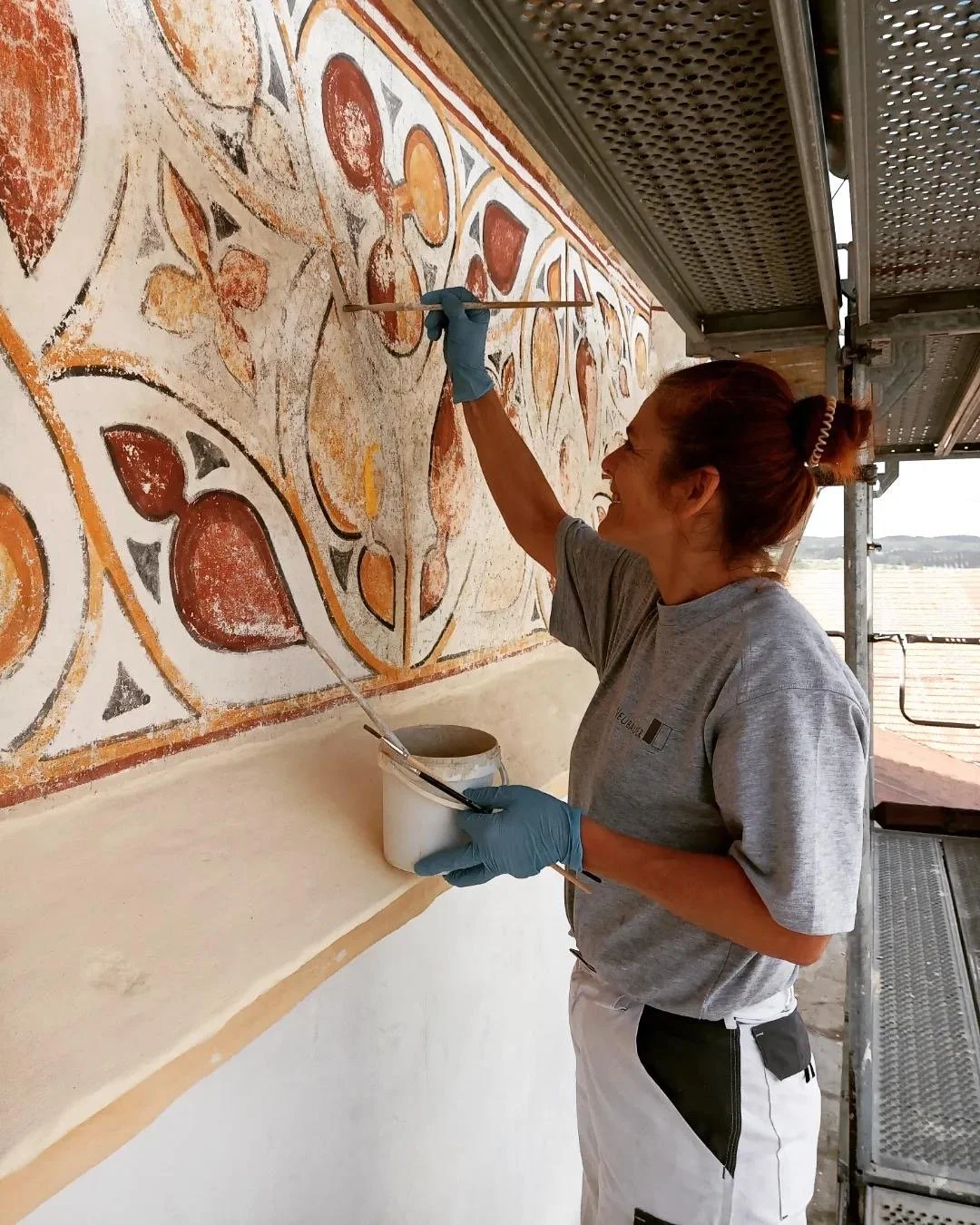
In 2022, I worked for one of the largest church painting companies, repainting the exterior of two churches. One was finished in limewash; the other in mineral silicate paint.
The difference to acrylic paint systems was profound.
Mineral silicate paints chemically bond with mineral substrates rather than forming a plastic film. They remain vapour permeable and age gradually rather than peeling.
Working with these systems reawakened something I had known instinctively: historic buildings need breathable materials.
That experience fascinated me and led me to enrol in a mastership course to deepen my understanding of traditional systems and conservation-compatible finishes.
When Training and Heritage Intent Collide
In recent years I have worked on significant heritage interiors where the gap between conservation intent and trade training became very clear.
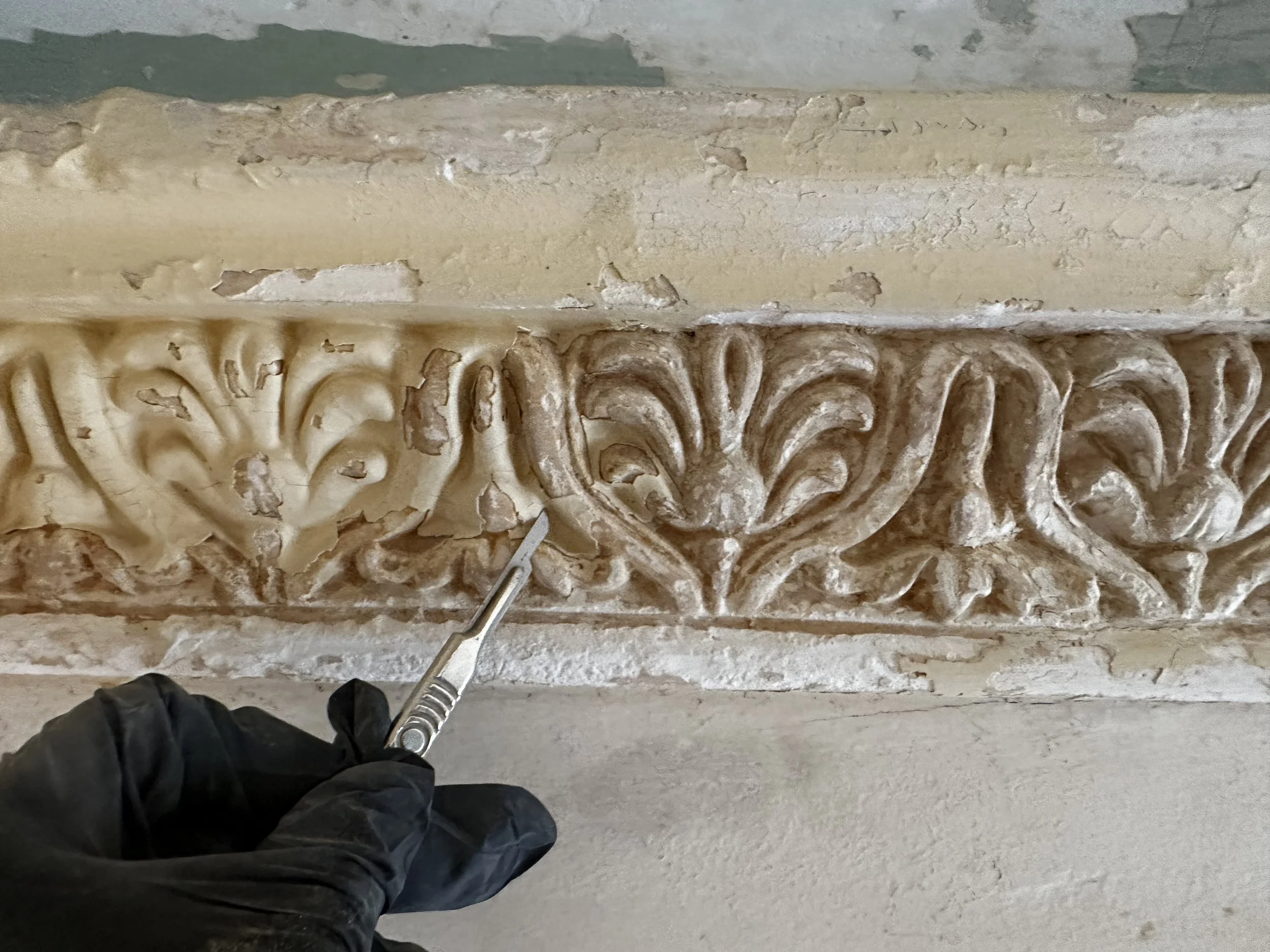
In one major state-owned heritage residence, ornate cornices and ceiling roses required weeks of careful paint removal - done by scalpel - to preserve the original plaster fabric.
A heritage plasterer completed compatible repairs. A conservator developed a bespoke casein distemper system after extensive testing.
Yet during application, parts of the work were finished in modern acrylic paint - including acrylic metallic “gold.”
The original cracking and failing acrylic had been painstakingly removed. And then partially reintroduced.
No individual was at fault. The painter applied what he was trained to use. That is the issue.
The Horsehair Ceiling
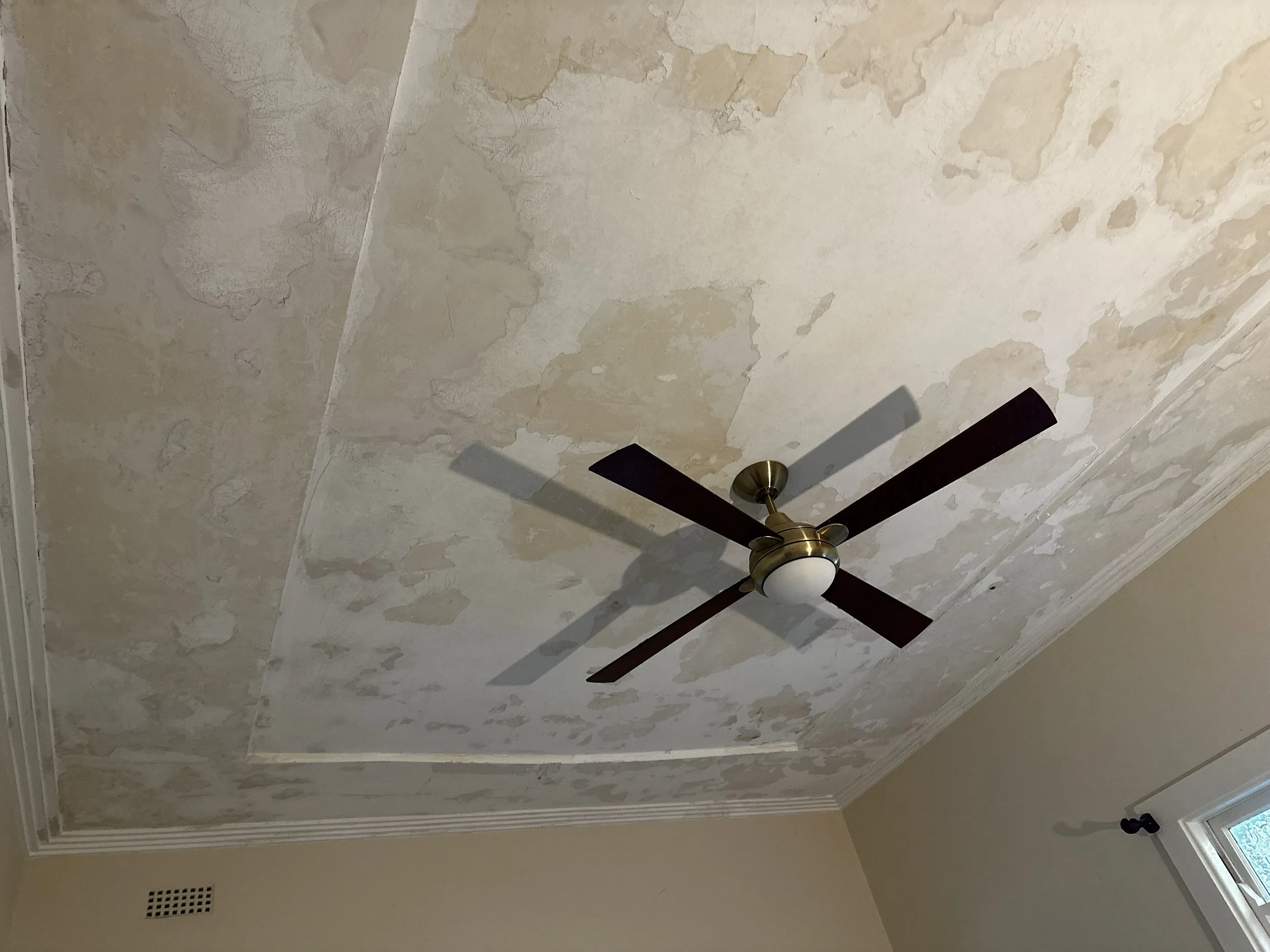
On another project, I worked on a traditional horsehair-reinforced plaster ceiling
Horsehair adds tensile strength to lime plaster. It allows subtle flexibility. It is part of a breathable mineral system.
Repairing such a ceiling requires understanding:
•fibre reinforcement behaviour
•lime curing cycles
•vapour permeability
•compatible repair materials
Without that knowledge, rigid fillers or impermeable coatings can unintentionally accelerate failure.
These ceilings are not simply “old plaster.” They are engineered mineral composites.
A Conversation That Says It All
On one historic plaster ceiling, I applied a two-coat mineral silicate system.
Another licensed painter told me he would traditionally apply:
• Three coats of oil-based undercoat
• Followed by two to three coats of acrylic topcoat
That is standard modern practice.
But five or six film-forming layers fundamentally change the way a mineral substrate manages moisture.
Over time such systems can lead to:
• micro-cracking
• delamination
• trapped moisture
• recurring repaint cycles.
Neither painter is incompetent.
We are products of our training.
And currently, Australian trade training does not embed traditional breathable systems in a structured way.
The Structural Gap
Through heritage conferences and industry discussions I repeatedly hear professionals speak about:
• Material compatibility
• Breathability
• Reversibility
• Conservation ethics
Yet the trades executing the work are rarely trained deeply in those principles.
Australia has developed a strong heritage consultancy sector. We have conservation management plans, heritage architects and technical advisors.
But heritage trade capability has not developed at the same pace.
Heritage buildings require material literacy, not just application skill.
Why Material Compatibility Matters
Traditional finishes such as limewash and casein distemper behave fundamentally differently from acrylic paints.
Casein distemper is:
• vapour permeable
• mineral compatible
• reversible
• sacrificial. Acrylic paint is:
• plastic film forming
• less vapour permeable
• mechanically different from mineral substrates
• difficult to remove without damage.
Historic buildings rely on breathable materials to regulate moisture movement.
Applying impermeable coatings can:
• trap moisture
• accelerate salt migration
• increase cracking
• compromise long-term fabric integrity.
This is not a matter of aesthetic preference.
It is building physics.
The Missing Pathway
Germany’s craft education system offers an instructive comparison.
Advanced qualifications such as the Meister integrate:
•technical mastery
•theoretical knowledge
•business competence
•and the right to train apprentices.
Specialised streams exist for monument preservation and church painting.
Australia currently has no equivalent pathway for heritage surface specialists.
Short workshops and conferences cannot replace structured, hands-on training.
A Practical Proposal for TAFE
Rather than importing a foreign system wholesale, Australia could develop a staged pathway within the existing vocational framework.
1. Heritage Modules within Trade Training
Additional units within the painting qualification could include:
• Limewash preparation and application
• Casein and distemper systems
• Mineral silicate systems
• Substrate compatibility and moisture logic
2. A One-Year Post-Trade Specialisation
A dedicated qualification in Heritage Surfaces and Finishes could include:
• Lime plaster repair
• Decorative plaster conservation
• Horsehair and fibre-reinforced systems
• Water gilding and traditional surface techniques
• Material testing and documentation
3. Industry-Assessed Heritage Endorsement
An advanced credential could recognise heritage craft mastery through:
• Portfolio of projects
• Practical demonstration
• Defence of material reasoning
• Mentoring capability
Such a program could begin as a pilot within TAFE, potentially in partnership with a German trade school experienced in heritage training.
This collaboration could support:
• curriculum development
• instructor training
• international exchange
• scholarship opportunities
This is not about importing a foreign system wholesale. It is about adapting proven heritage trade education to Australian conditions.
Why It Matters Now
Many Australian heritage buildings are now between eighty and one hundred and fifty years old and entering a critical maintenance phase. The materials applied today will determine whether these buildings remain serviceable for future generations.
At the same time, Australia is preparing for the Brisbane 2032 Olympic and Paralympic Games, which will bring major infrastructure projects, venue upgrades and building renovations across Queensland and beyond. Much of this work must be completed well before the Games begin, with planners aiming for key venues to be finished by around 2031.
This moment highlights an important opportunity. As the country invests in upgrading facilities and historic sites for international events, it also has a chance to strengthen the skills of the trades responsible for maintaining and restoring the buildings that form part of our cultural landscape.
Heritage conservation is also closely connected to sustainability. Existing buildings contain large amounts of embodied energy - the energy already used to quarry materials, manufacture components and construct the structure. Demolishing and rebuilding wastes that embedded energy and generates significant additional carbon emissions.
Renovating and maintaining existing buildings is therefore often far more environmentally sustainable than replacement construction. Traditional breathable materials such as limewash, mineral paints and lime plasters also tend to be low-energy, mineral-based systems with a very small environmental footprint compared to modern synthetic coatings.
Historic buildings also contribute significantly to cultural tourism. Cities such as Florence demonstrate how preserved historic fabric can attract visitors from around the world. Australia may not have medieval cities, but many towns and historic precincts rely heavily on their architectural character to attract visitors and support local economies.
Maintaining these places requires skilled tradespeople capable of working with traditional materials. Without that expertise, the authenticity and longevity of historic buildings can gradually be lost.
Investing in heritage trade education is not nostalgia.
It is preventative asset management.
It also supports:
• sustainability through repair rather than replacement
• regional employment opportunities
• cultural tourism
• strengthening Australia’s specialist trade skills
From Frustration to Framework
The examples described above are not isolated anecdotes.
They reveal a systemic gap between heritage intention and trade training.
Australia has:
• heritage policies
• conservation expertise
• protected buildings.
What it lacks is a structured pathway for tradespeople to master the traditional materials these buildings require.
“If we wish to preserve our built heritage responsibly, we must invest not only in plans - but in hands.” © 2026 Krissie Kalteis
A recognised heritage trade pathway would ensure that future painters and plasterers understand not only how to apply a material, but why that material matters.
Without such training we risk repeating cycles of incompatible intervention.
With it we could build a new generation of craftspeople capable of protecting Australia’s architectural heritage with technical understanding and pride in their craft.
Bringing It All Together
Over the past decade I have worked across modern construction, heritage interiors, churches and institutional buildings. Through those experiences one pattern has become increasingly clear.
Australia does not lack heritage awareness.
We have heritage consultants, conservation plans, government registers and growing public interest in preserving historic buildings. Conferences regularly discuss compatibility, reversibility and the importance of breathable materials.
What we lack is a structured pathway for the trades responsible for executing that work.
Most painters, plasterers and decorators are trained almost entirely in modern construction systems. When faced with heritage materials, they naturally apply the techniques they know best.
This is not a failure of individuals.
It is a gap in education.
Traditional materials such as limewash, distemper, mineral paints and fibre-reinforced plasters require a different kind of material literacy. Without structured training in these systems, heritage specifications remain theoretical rather than practical.
At the same time, many Australian heritage buildings are now entering a critical maintenance phase. Buildings constructed eighty to one hundred and fifty years ago require careful intervention if they are to remain viable for future generations.
The materials we apply today will determine their condition decades from now.
Developing a structured heritage trade pathway within vocational education - potentially through TAFE and international collaboration with established heritage craft schools - would be a practical step toward addressing this gap.
Such training would not only preserve traditional knowledge but also strengthen Australia’s construction skills base, support sustainable repair practices and create new opportunities for tradespeople interested in specialist craft.
For me, this issue is not theoretical.
It comes directly from standing on scaffolding, removing failing acrylic paint from historic plaster, working with limewash on church facades, and seeing how different materials interact with older buildings.
Those experiences have convinced me that heritage conservation cannot succeed through documentation alone.
It also requires hands trained to understand the materials they are working with.
If we want to care properly for Australia’s built heritage, we need to invest not only in conservation plans - but in the craftspeople who bring them to life.
And that conversation can begin now.
👉 https://www.precious-wall-finishes.com/heritage-craft-natural-finishes
© 2026 Krissie Kalteis | Precious Wall Finishes